Tuesday, October 4, 2011

Greatest Heavyweight Boxers

So, for you boxing fans out there, here are the greatest heavyweight boxers.

Muhammad Ali


Muhammad Ali is the most famous boxer in history by far. Everyone in the world knows his famous motto, “Float like a butterfly and sting like a bee.” His dancing skill, his footwork and hammerblow of a jab were unprecedented. Marciano called him the fastest heavyweight he had ever seen. He threw his punches faster than anyone before or since, because he trained by punching underwater. He was so awe-inspiring that even before he won the championship, people were touting his praise over Joe Frazier.

Then they met, and Joe proved to be the toughest man Ali had ever met. He finally floored Ali with his famous left hook, a thing of beauty. After Ali lost on points he said, “Yeah, it hurt! he’s a great fighter! But if you look at me, I don’t have nothing wrong with me. I’m still so pretty! Joe looks like he went drunk driving without a car and ran into a telephone pole about 15 times.”

He was the poet of the boxing world. “The referee calls an end to the fight cause Smokin’ Joe Frazier’s a smoking satellite!” Then he made history by beating Joe’s conqueror, Foreman, the most powerful puncher in the world at the time. He did it in lengendary fashion, going into the fight with a specific gameplan, to outsmart Foreman, and make him punch himself out. His corner thought he was nuts. Foreman had knocked out Frazier, who was tough as nails, in only 2 rounds. 2 years after he lost to Ali, everyone saw that it wasn’t a fluke, when he knocked Frazier out again, in only 5.

Ali had no fear of Foreman, and trusted in his phenomenal body conditioning. After 4 hair-raising rounds of pummeling, he went to his corner and said, “Okay, I got him, now. It’ll be 8 when it happens.” And it was. Unfortunately, the lure of the ring was too much for Ali, and he fought long after he should have retired. Larry Holmes punished his head more than anyone. Now he has Pugilistic Parkinson’s Syndrome (not the disease).

Ali is generally credited with having successfully faced the toughest all around competition in the heavyweight division in history: Frazier, Foreman, Chuvalo, Bonavena, Quarry, Larry Holmes, Ken Norton, Earnie Shavers, and Leon Spinks.

Rumble, young man, rumble.

Rocky Marciano


Oh, there he goes! There he goes! Every time some white guy starts talking about boxing…

Rocky had the worst technique of all the heavyweight champions. So how did he manage to win the championship? Joe Walcott was the man to beat, and he was no slouch. He came closer to putting Marciano down than anyone, and made Marciano look silly for 12 rounds. That’s a long time to weather Marciano’s power.

Then in the 13th, Walcott went for that “sneak right hand,” and Marciano had been waiting for it for a good 5 rounds. His right hand landed first, and it remains the hardest punch ever landed in a fight by anyone. The crowd roared, but when Walcott went down, he didn’t try to get up. He just slumped with his left arm over the bottom rope, and the referee could have counted to 10. The arena went deathly silent. Those in the first several rows heard the thump and feared that Marciano had snapped Walcott’s neck with one swing.

His cornermen spent 3 minutes waking him up with smelling salts. He claimed not to remember it. Marciano’s secret for winning consisted of a number of factors, all of which came naturally to him. He loved to train, as opposed to a lot of boxers these days, and ran 5 miles every day, 365 days a year, up and down the steep hills around Brockton, Mass. He’d sprint up, sprint down backward, forward, with 30-pound weights on his shoes.

“If you train like I do, your legs’ll carry you 40 rounds,” he once said. About his power, he explained, “I don’t aim for his face. I aim for the back of his head.” He trained his punches on a special, 300-pound heavy bag, because the normal 80-pound bags no longer held up to his power. After a while, he was able to bend the 300 pounder in half with either fist.

About a month before a fight, he’d run 10 miles a day, then 12 to 15 in the last two weeks before the fight. When he got in the ring, he had power beyond belief, an inexhaustible reserve of energy, and a steel chin that didn’t mind going through Hell to get close to his opponent. All of this more than made up for his relatively small stature, only 5’10.5”, 189 lbs at most, with a reach of only 67 inches. Walcott’s was 74 inches.

He was a swinging machine, who didn’t seem to know the use of fear. “I was too busy getting hit.” He didn’t seem to notice the pain of the punches. “No, I was too busy getting hit.” Archie Moore, his last opponent, said, “It was like fighting an airplane propeller. He had no footwork to stay out of my reach, but then I was the one who wanted to stay out of his. I tried to make him punch himself out, but he never ran out of gas.”

In the 6th round of their fight, Marciano threw haymakers and uppercuts for 45 seconds, nonstop, at the dodging Old Mongoose, most missing or glancing off the top of his head and shoulders, but Marciano just kept swinging until Moore dodged into one too many. When asked later which punch hurt the most, he said, “Man, they all hurt! It was like getting hit with a blackjack or a bag of rocks.”

Marciano put Carmine Vingo in a coma with one punch to the temple. When Vingo recovered, he retired. Marciano pounded on Roland LaStarza’s forearms and shoulders nonstop for 3 rounds, until LaStarza’s arms hurt so badly that he couldn’t lift them to his face. Then Marciano knocked him through the ropes. LaStarza’s forearms were both broken, and their bruises were beaten into thick jelly that had to be surgically removed.

Joe Louis


The Brown Bomber! Now that was a great fighter! He had the finest mix of dancing and power punching, and the longest reign as world champion, 11 years, from 1937 to 1948, retiring as champion, after 27 title defenses. The only man who beat him in his prime was Max Schmeling. Schmeling, Charles, and Marciano are the only men who defeated him, once each, and Schmeling and Marciano, the only two who knocked him out.

From January 1939 through May 1941, Louis beat thirteen men in title defenses, which was so high a rate of fights that no one had seen it since the bare-knuckle barnstorming of the 1800s. It was unheard of for a champion to agree to that many fights, much less title defenses. He is the only man to have knocked out James Braddock, with a hellacious right hand in the 8th round. If Louis ever had to fight a rematch, he destroyed his opponent. No more being cautious. When he fought Schmeling for the second time, he nearly killed him, in only one round. He cracked several vertebrae in Schmeling’s back, but never hit him in the back. The concussive force was delivered laterally, to Schmeling’s sides, breaking several of his ribs also.

He was well past his prime when he met 29-year-old Marciano.

Jack Dempsey


Arguably as popular and well known throughout the country as John L. Sullivan in his prime, Dempsey boasts the greatest left hook in boxing history. He used it to knock Jess Willard down for the first time in his career in the first round of Willard’s title defense. He had no business holding the belt, as the fight is recorded, and Dempsey destroyed him.

Willard didn’t answer the fourth bell, at which point he had suffered a broken jaw, broken cheekbones, broken ribs, and four teeth swallowed. Willard was 6’6.5”, Dempsey only 6’1”, which means he had to punch well up when Willard was standing straight, but Dempsey just pounded his body until he bent over.

He was a brawler, and lost to Tunney twice. The second fight, in 1927, is the Long Count Fight, during the 7th round of which Dempsey landed a thundering 8-punch flurry that put Tunney down. Dempsey wouldn’t go to a neutral corner, a brand new rule, and the referee couldn’t start counting until he did. When he finally backed away from Tunney, the referee began counting, and Tunney got up at 9. He had been down about 14 seconds.

He claimed later that he wasn’t hurt, just using all the time he had. Nevertheless, it was the only time Tunney had been knocked down, and though he managed to win on points, nobody in the teens and 20s was as devastating as Dempsey. He later explained to his wife, Estelle, his loss to Tunney, “Honey, I forgot to duck,” and then burst out laughing.

In 1973, Jack Dempsey, at 78 years old, was leaving his famous Jack Dempsey’s Broadway Restaurant, in Manhattan, to go home, when a mugger hurried into his cab after him. Before he could demand money, Dempsey turned around, socked his left hook across the man’s chin, and knocked him sprawling out of the car, out cold in the gutter. Dempsey closed the door and the cab drove off. If you can make it there, you can make it anywhere.

Joe Frazier


One of the toughest men in boxing history, bar none. He lived and trained in Philadelphia, and the city has become synonymous with tough-as-nails boxers. He handed Ali his first defeat, and in their third fight, he lasted 14 rounds, out-pointing Ali in at least the middle 5, in sweltering humidity. His corner called the fight because his eyes had swollen and he couldn’t see Ali’s punches.

As soon as it was over, they asked him how he felt, and Frazier said, “We’re gonna fight again!” Both men looked like a brick wall had fallen on them. Frazier had the second greatest left hook in the business, with which he floored Ali and almost killed Jerry Quarry (who claimed to be dizzy for 4 days afterwards). After his first fight with Ali, he was rushed to the hospital for severe dehydration and kidney failure. Foreman’s monumental power suited him perfectly when facing a swarmer like Frazier, and Frazier simply couldn’t stand up to it. The boxing world dropped its jaw when it saw this in two fights. But he was able to hold his own very well against Ali, and every other fighter of the day was no match. He and Ali will forever be synonymous for one of boxing’s all-time rivalries.

Gene Tunney


Often considered the best pure boxer in history, with the ability to hit hard, but the footwork to stay away. He could also box very well backing up, which Ali never had to do because he was so fast he could stay away without having to punch. But when Ali faced a goliath like Foreman, he turned on his rope-a-dope, which is very simple and effective, if you can take it. It’s too risky and no coach has ever advised it for a whole fight against someone with Foreman’s power. Tunney’s nemesis, Jack Dempsey, had that brutal power, and raging savagery backing it up.

Tunney was not about to stand and weather it, so he displayed some of the finest defensive boxing technique in the history of the ring in order to stay away from the Manassa Mauler. Tunney only lost one professional fight, to Harry Greb, out of 66. He beat Harry Greb twice.

George Foreman


Often thought of as the most powerful puncher in the history of the sport, Foreman could easily break men’s bones with his punches. Once he hit his stride in the early 1970s, he developed the bad habit of not fearing his opponents, and thus only training his power, not his endurance. When he took down Frazier in only two rounds, the world figured that he would go on to the end undefeated, since no one was tougher than Frazier.

Then Ali showed the world what a well-conditioned body can withstand, provided that the head is out of the firing line. Foreman never really recovered in his first career, and though he won a lot more fights, he had nightmares about trying to get up in time to finish Ali. This was his impetus for coming out a 10 year retirement. He had been champion, beating Frazier twice. There didn’t seem anything left to prove. But he wanted to account for his loss to Ali, and shocked the world by winning the title back at the ripe old age of 45, fat and lead-footed, from Michael Moorer (not the mockumentary director, although oh, how I wish). Foreman showcased, dubious as it is, his ability to take a lot of punishment, to the head and body, as if it was business as usual.

The whole arena knew what he was trying to do to Moorer, but Moorer just kept standing toe-to-toe with him, until Foreman caught him with his right hand. Lights out every time.

Joe Walcott


He was one of the craftiest, most superb technicians of the heavyweight division, ever. He put steel-chinned Ezzard Charles down for the count with possibly the finest single left hook ever landed, a picture perfect work of art, that twisted Charles’s head so sharply, the spectators thought his neck was broken.

It was Walcott’s patented maneuver, which he could do with either hand. He’d back up a step or two, let the man come for him, then pop him with his rear hand, whichever was protecting his face. He called it his “sneak hand.” He used it to telling effect on Rocky Marciano, staggering him plenty of times, and knocking him down for one of only two times Marciano hit the mat. Archie Moore gave him his other knockdown.

He’d tie Marciano up every time he came near to do damage, and Marciano was losing badly, until the 13th round, when Walcott went for another sneak right hand, that didn’t turn out the way he’d hoped. Walcott can still take solace in the fact that he gave Marciano the worst pummeling he ever suffered.

Evander Holyfield


One of the best conditioned fighters in history. Holyfield had nearly inexhaustible stamina, especially amazing given that he had a bad heart, and no one ever knew it until his third fight with Riddick Bowe. It was their first fight that cemented both men’s legacies. In the 10th round, they stood and traded thundering power shots like two trees, banging and swinging until Holyfield went down. Then he got up and swung some more.

He lost that fight by decision, but he gave Bowe his only defeat so far in their second fight, and his only knockdown in their third fight. He scared Mike Tyson so bad that Tyson resorted to ear biting. Holyfield was one of the few men who had no intention of taking Tyson’s bullying, even slamming a good right across Tyson’s face well after the bell.

Ezzard Charles
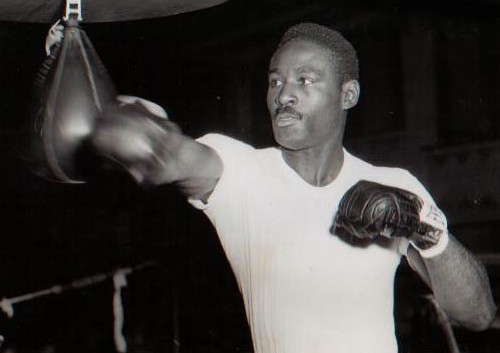

One of the most steel-chinned men ever to fight. He may be the second greatest light heavyweight of all time after Archie Moore. Charles killed Sam Baroudi after a very brutal fight. It shouldn’t be praised, as Charles felt terrible afterward, and adopted a more cautious style. A true gentleman. But it does show the vicious intensity he had in close-quarters mix-ups.

He is the only man to last 15 rounds with Rocky Marciano, a Herculean feat, as by the last 2 rounds, he could no longer see and took power shot after power shot to the head and body, and refused to go down. Marciano gave him a big smile and hug at the bell. He beat Archie Moore three times, and Joey Maxim, and Charley Burley. Then he beat Joe Walcott on points to win the title, then took down the aged Joe Louis the next year. Aged or not, Louis was still Louis, and served as a foil for Charles’s fame.

But Walcott came back to knock him out, and he tried but failed to beat Walcott for the title again. Then he faced Marciano in two astoundingly bloody fights. The second made fight of the year, when it climaxed with Charles cutting Marciano’s nose so badly that his corner stuffed it with super glue to stop the bleeding. He could have peeled his nose in half off his face. Marciano, however, rallied to knock Charles out, because he was in danger of losing due to the blood.

Monday, October 3, 2011

Famous Ghost Ships

Ghost Ships are defined as: “fictional haunted ships, or ones found adrift with their entire crew either missing or dead, or one which has been decommissioned but not yet scrapped”.

Ourang Medan


In June, 1947, frantic Morse Code messages were received from the Dutch freighter Ourang Medan. The message was received by many ships and several responded. The message reported ‘All officers including captain are dead lying in chartroom and bridge. Possibly whole crew dead.’ A second message was received shortly after, this time a voice over the radio simply stating ‘I die’. Dutch and British listening posts were able to triangulate the position and vector a rescue attempt to the Ourang Medan. After several hours the Silver Star the arrived on scene. After failed attempts to hail the vessel using whistle signals and flashing lights. they assembled a small team and boarded the apparently undamaged Ourang Medan. They first ventured to the bridge where a radio was playing, several members of the Ships’ Company, including the Captain, were found dead, more corpses were discovered on the Cargo Deck including a dog standing on all four legs, frozen and snarling into thin air.

No survivors were found on board, but what was most disturbing was the nature of the bodies, all frozen in place looking up towards the sun, their arms outstretched, mouths gaping, and a look of immense horror on all their faces. A trip to the communications room revealed the author of the SOS messages, also dead, his hand still on the Morse sending key, eyes wide open and teeth bared. Strangely, there was no sign of wounds or injuries on any of the bodies. The crew of the Silver Star attempted to enter the Cargo Bay but a small explosion from an unknown source soon resulted in an uncontrollable inferno. Beaten back, they were forced to abandon the vessel and return to the safety of the Silver Star. Within minutes the vessel sank to the depths of the ocean floor.

Although there are no clear records of a ship by the name Ourang Medan existing, many conspiracy theorists believe the vessel was acting under a false name and was transporting something that ‘officially’ did not exist.

The fate of the Ourang Medan and her crew remain a mystery. Speculation has been made that pirates killed the crew and sabotaged the ship, although this doesn’t explain the peculiar grimaces and lack of injuries on the corpses. Others have claimed that clouds of methane or other noxious natural gases could have bubbled up from fissures on the sea bed and engulfed the ship. Even more fantastical theories involving aliens and ghosts abound.

Mary Celeste


The Mary Celeste can rightly claim the title of the greatest maritime mystery of all time, and is definitely the most documented case of a missing crew. To this day the events that lead to the 8 crew and 2 passengers apparently vanishing from the face of the Earth are a topic of great controversy and debate.

On December 13th, 1872, onlookers witnessed a small 2 masted sailing vessel entering the Bay of Gibraltar. The Mary Celeste had sailed from New York on November 7th, and was bound for Genoa; she had a cargo of 1701 barrels of Alcohol. On the Afternoon of December 5th, Captain Morehouse of the Dei Gratia came upon a Brigantine following a parallel course that he recognized as the Mary Celeste. He and the Master, Captain Briggs, were close friends and had dined together before setting sail. Morehouse was alarmed to see the Celeste Yawing irrationally, surprising as he knew Briggs to be a talented seaman. After 2 hours of attempted hails with no reply, Morehouse proceeded to board the out of control vessel.

The Celeste appeared sea worthy and seemed to have been abandoned with haste. All of the ship’s papers were missing with the exception of the Captain’s Log, with the last entry stating the ship had passed the Azores on November 25th. Stories arose of warm cups of tea, half eaten breakfast and still smoking pipes, these stories are most likely untrue but it was clear the vessel had been abandoned in a hurry, but there were no signs of violence or a struggle. A six-month supply of uncontaminated food and fresh water was still aboard, and the crew’s personal possessions and artifacts were left untouched, all the cargo was accounted for with the exception of 9 barrels being empty. There was water damage to the vessel which lead some to believe the Celeste was abandoned due to inclement weather, but this contradicts Briggs personality: he was described as a brave and courageous man who would only abandon ship if there was an imminent risk of loss of life. Morehouse sailed the Celeste into Gibraltar, arriving on December 13th.

A marine surveyor who was charged with investigating the mystery discovered what he believed to be a few spots of blood in the captain’s cabin, an “unclean” ornamental cutlass in Briggs’ cabin, a knife and a deep gash on a railing that he equated with a blunt object or an axe, but while he did not find such a weapon on board, he believed the damage was recent. He found no trace of any damage to the vessel and she was found seaworthy.

Many explanations were put forward for the events: Piracy, Insurance Fraud (Briggs and Morehouse colluded), murder by the crew of Dei Gratia, Sea quake or other phenomena, an explosion caused by the fumes from the cargo, Ergotism from contaminated flour causing the crew to become mad, mutiny and several paranormal explanations.

Over the next 13 years the Mary Celeste changed hands 17 times, with several tragic deaths. Her final Captain deliberately grounded her to make a false insurance claim. In 2001, the National Underwater and Maritime Agency claim to have found the wreck of the Mary Celeste, although skeptics claim that there are hundreds of similar wrecks in the area and cannot determine with any certainty the identity of the vessel.

Lady Lovibond


13th February, 1748 – Celebrating his marriage, Simon Reed took his new bride, Annette, aboard his ship, the Lady Lovibond, for a cruise to Portugal. At the time it was considered bad luck to bring a woman onboard. Unbeknownst to Reed, his First Mate, John Rivers, was in love with the Captains wife and paced the deck in an uncontrollable rage. Overcome with jealousy, he attacked the helmsman with a belaying pin, killing him instantly. Rivers took the wheel and steered the Lovibond towards the notorious Goodwin Sands. All souls were lost and the subsequent inquiry ruled a verdict of Misadventure.

50 years later to the day, 2 separate ships witnessed a phantom ship sailing the Goodwin Sands. On the 13th February, 1848, local fishermen saw a vessel wreck on the area and lifeboats were sent out to investigate, with no sign of ship on the sands being found. In 1948, the ghost of Lovibond was seen again by Captain Bull Prestwick and was described as looking real but having an eerie green glow.

Unfortunately, you will have to wait until the 13th February, 2048, for the next sighting, as she is said to appear only once every 50 years: don’t forget to mark your calendar. The Goodwin Sands are England’s most fertile grounds for ghost ships, and are also the location of the legendary island of Lomea. The Lady Lovibond shares the area with two other phantom vessels: a liner called the SS Montrose and the Shrewsbury, a man-of-war.

Octavius


The Octavius was allegedly discovered West of Greenland by a whaler on October 11th, 1775. Crewmembers of the Whaler Herald boarded the assumed derelict Vessel, discovering the entire crew dead, frozen, apparently at the moment of their death. The Captain was found in his cabin, also frozen at his desk with his pen in hand, still writing in his log. He was accompanied by a dead woman, a child covered in a blanket and a sailor holding a tinderbox. The petrified boarding party left in a hurry, taking only the log back to the Herald. Unfortunately, its frozen state meant that it slipped from its binding and they only recovered the first and last pages. The partly complete entry in the log was dated 1762, meaning the vessel had been in the state they discovered it for 13 years.

The Octavius had left England for the Orient in 1761. The Captain opted to take the treacherous, but much shorter route of the unconquered North West Passage. It is believed the ship became trapped in ice whilst traveling past Northern Alaska. The discovery of the ship meant that the Octavius was the first ship to Navigate the North West Passage, albeit the crew never lived to witness it. The ship was presumed to have broken free of the ice in the winter months and the crew, dead from exposure, drifted with the winds for 13 years. The Octavius was never seen again after this strange encounter.

Young Teazer


Built in 1813, the Young Teazer was an American Privateer Schooner preying on sea trade of the British Empire off the coast of Halifax. She was a remarkably fast vessel taking many prizes from Nova Scotia, several right at the mouth of Halifax Harbour. In June, 1813, the Teazer was chased by the Nova Scotian Privateer Brig Sir John Sherbrooke, but Teazer was able to escape into the Fog. Shortly after, HMS La Hogue, a 74-gunned third rate ship of the line, pursued the Schooner as she was reportedly cornered in Mahone Bay. With nightfall pending, La Hogue was joined by HMS Orpheus and the vessels prepared to board Young Teazer, which had no where left to run.

The La Hogue sent a five boat boarding party towards the Schooner. As the boats approached, the Young Teazer exploded. 7 of the crew survived and claimed they last saw the Teazers First Lieutenant, Frederick Johnson, running to the main magazine with flaming embers, considered mad Johnson threw the embers into the ammunition killing himself and 30 other crew members, many of whom lie in unmarked graves in an Anglican Cemetery in Mahone Bay.

Soon after the tragic event, eye witness reports began to surface that the Young Teazer had reemerged from the depths as a fiery spectral ship. The Following year, on June 27th, people of Mahone Bay were startled to see an apparition sailing into the same water where the Young Teazer had been destroyed. As it came nearer they recognized it as the privateer, and then it vanished in a huge puff of flame and smoke. The story spread through the country, and on the next anniversary many more were on hand, watching for “the fire ship.” Sure enough, it appeared again, and it is legend to this day that many persons have witnessed the appearance of the ghost ship, and have seen it disappear in flame. If you are standing on the deck of a ship at sea, the apparition appears to threaten to ram your vessel. Many report an overwhelming sense of fear when they see the phantom pirate ship. The Ghost Ship, known locally as ‘The Teazer Light’ can be seen on foggy nights, most notably those that fall within 3 days of a full moon.

Flying Dutchman


Probably the most famous Ghost Ship, The Flying Dutchman has been popularized by ‘The Pirates of the Caribbean’ and for the big kids amongst you ‘Spongebob Squarepants’ (The Frying Dutchman). But what many people will not know is that ‘The Flying Dutchman’ refers to the Captain of the vessel, and not the vessel itself.

Several Spectral ships around the World are known as ‘The Flying Dutchman’ but I am going to refer to the original, located off the Cape of Good Hope. Here is the embellished tale:

“The Captain of the vessel, Hendrick Van Der Decken, was voyaging around the Cape of Good Hope with a final destination of Amsterdam. He swore to Round the Cape if it took him ’til Doomsday’. With a terrible storm abound, Van Der Decken refused to turn the ship around despite the pleas of the crew. Monstrous waves pummeled the vessel while the captain sang obscene songs, drank beer and smoked his pipe. Finally, with no options remaining, several of the crew mutinied. The Captain, aroused from his drunken stupor shot dead the lead mutineer and threw his body overboard, above him the clouds parted and a voice billowed from the Heavens.

‘You’re a very Stubborn Man’, to which the Captain replied ‘ I never asked for a peaceful voyage, I never asked for anything, so clear off before I shoot you too’ Van Der Decken made aim to fire into the sky but the pistol exploded in his hand.

‘you are condemned to sail the oceans for eternity, with a ghostly crew of dead men. Bringing death to all who sight your spectral ship, and to never make port or know a moments peace. Furthermore, gall shall be your drink, and red hot iron your meat’”

There have been many sightings of The Flying Dutchman, often by reputable and experienced seamen, including Prince George of Wales and his brother, Prince Albert Victor of Wales,

According to Admiral Karl Doenitz, U Boat crews logged sightings of The Flying Dutchman off the Cape Peninsula. For most or all of these crews, it proved to be a terrible omen. The ghostly East Indiaman was also seen at Muizenberg, in 1939. On a calm day in 1941, a crowd at Glencairn beach saw a ship with wind-filled sails, but it vanished just as it was about to crash onto the rocks.

MV Joyita


The MV Joyita was a luxury yacht, built in 1931, in Los Angeles for Movie Director Roland West. During the Second World War she was outfitted as a Patrol Boat and worked around the coast of Hawaii until the end of the War.

On October the 3rd, 1955, the Joyita set sail from Samoa bound for the Tokelau Islands 270 nautical miles away. Her departure had been delayed due to a clutch malfunction on the port main engine, the clutch was not repaired and the Yacht sailed on one engine. There were 25 souls on board, including a Government Official, 2 children and a surgeon on his way to perform an amputation. Though the journey should have taken no more than 2 days, by the 3rd day Joyita had not arrived in port. No distress call had been received even though the vessels course would have kept her well within radio range of coast guard and relay stations. A 100,000 sq mi search was conducted by aircraft of the Royal New Zealand Air Force but there was no sign of the Yacht, her crew or passengers.

It was not until November 10th, 5 weeks later, that the vessel was found. The Tuvalu sighted the Joyita 600mi from her planned route. The vessel was listing heavily to port with her deck edge partially submerged. 4 tonnes of cargo were missing and none of the crew members were onboard. The ships VHF radio was tuned to the International Distress Frequency. The vessel was found to still be running on one Engine, with an auxiliary pump rigged but not running. All the clocks on board had stopped at 10:25 and switches for cabin and navigation lights were on. A doctor’s bag was found on the floor with 4 blood stained bandages. The logbook, sextant and chronometer were missing, along with 3 life rafts.

A subsequent enquiry found that the vessels hull was sound and that the fate of the crew was ‘inexplicable on the evidence submitted at the inquiry’. The missing life rafts were especially intriguing as the vessel was cork lined, making her unsinkable, a fact the Master and the crew would have been fully aware of. No mention of the use of the medical equipment was in the investigation. The missing cargo also remained a mystery.

Theories ranged from the outright bizarre: Remaining Japanese forces from World War II were to blame for the disappearances, operating from an isolated island base to the more believable: insurance fraud, piracy, mutiny.

The Joyita was repaired, but ran aground on several more occasions, being dubbed a cursed ship she was eventually sold for scrap in the 1960s.

Eliza Battle


Launched in Indiana in 1852, the Eliza Battle was a luxury wooden hulled paddle steamer regularly entertaining Presidents and VIPs. Disaster struck on a cold night in February 1858, when the steamer navigated the Tombigbee. A fire started on cotton bales on the main deck and soon spread out of control. The strong winds helped the fire spread quickly over the upper deck. Out of control, the Eliza Battle drifted downstream, coming to rest at Kemp’s Landing. Men died in efforts to save their loved ones and women died in their efforts to save their children, though, fortunately, there were few aboard the ill fated final trip of the Eliza Battle. Of the estimated 100 people on board, 26 souls were lost, mainly attributed to death by exposure. The ship sank in 28ft of water, and its wreck remains to this day.

During the spring floods, late at night during the full moon, it is said the riverboat can be seen rising out of the water and floating up the river with music playing and fires burning on the deck, sometimes only the outline of the steamer is sighted. The fire is so bright a name plate bearing the name Eliza Battle can be seen on the side of the vessel. Local fisherman believe that sighting the Eliza Battle is a sign of an impending disaster and ill omens to ships still plying the Tombigbee River.

Baychimo


Built in Sweden in 1911, the Baychimo was a Pelt trader along the routes of North West Canada. She was given to Great Britain by Germany as part of War reparations.

The 20 year old Cargo Steamers final (crewed) voyage occurred in October 1931, carrying a cargo of fur. The vessel became ice packed off the coast of the town of Barrow. The crew temporarily abandoned the vessel and headed 1/2 a mile inland in search of shelter from the freezing conditions. The ship eventually broke free of the ice a week later, on the 8th October, and the crew returned, only to become trapped in ice, again, on the 15th October. 15 crew members built a makeshift shelter some distance away, intent on waiting out the winter and eventually sailing the ship free.

On the 24th November, a blizzard struck. When it calmed, the crew found that the Baychimo had vanished, presumed sunk in the storm. Several days later a seal hunter informed the crew that he had sighted the vessel about 45 miles from their camp. The crew tracked the vessel to retrieve their precious cargo and left the Baychimo to its fate.

Over the next 4 decades there were numerous sightings of the Baychemo along the coast of Canada. Several boardings were attempted, few were successful, the ones that were often resulting in the salvagers becoming trapped inside due to adverse weather conditions. The last confirmed sighting occurred in 1969, 38 years after she was abandoned, she was found frozen in an ice pack. In 2006, the Alaskan Government began an operation to locate the ‘The Ghost ship of the Arctic’ but, to date, they have been unsuccessful.

Trapped in Ice, floating or at the bottom of the ocean, the fate of the Baychimo remains a mystery.

Carrol A. Deering


The Carrol A Deering was a 5 mast Schooner, built in 1911. Named for the owner’s son, she was a cargo vessel and her final voyage found her sailing from Rio De Janeiro, Brazil, on December 2nd, 1920. The Master, William Merrit, and his first mate, Sewall Merrit (his son), had a crew of 10 Scandinavians. Both fell ill and Captain W. B. Wormell was recruited as a replacement.

After leaving Rio, the Deering stopped in Barbados for supplies. Here, the First Mate, McLennan, got drunk and complained to a fellow Mariner about Captain Wormell, his incompetence at disciplining the crew and his inability to Navigate the ship without the aid of McLennan. McLennan was arrested after he was overheard boasting “I’ll get the Captain before we get to Norfolk, I will”. Wormell forgave him, bailed him out and the Deering set sail for Hampton Roads.

The Vessel was not sighted until January 28th, 1921, when a Lightship keeper was hailed by a red haired man milling around on the foredeck. The man told the Lightship keeper, in a foreign accent, that the Deering had lost her anchors, but the Keeper was unable to relay the message due to a malfunctioning radio.

3 days later, on January 31st, the Deering was found aground on Diamond Shoals, off Cape Hatteras. Boarding of the ship was delayed due to bad weather and eventually rescue personal made it on to the vessel on February 4th. What they found made the Deering one of the most written about maritime mysteries in history. The Deering was completely abandoned. The logs and Navigation equipment were missing, as were 2 of the ships lifeboats. The Galley was midway into preparation for the following days meal. Unfortunately, the vessel was scuttled with Dynamite before a full investigation into the mystery could take place.

The crews disappearance occurred in the Bermuda Triangle, and several other vessels had disappeared in the same period and region as the Deering, including the sulfur freighter Hewitt. Many theories became popular during the investigation including Paranormal explanations, mutiny, piracy and Rum-runners stealing the vessel to sail to the Bahamas. The formal investigation ended in 1922, without any official ruling on the mysteries surrounding the apparent abandonment of the Carrol A. Deering.

Amazing Facts About Japan

Over the years, Japan has become one of the most interesting countries in the world. Its unique culture, great food and technological edge has fascinated and inspired the rest of the world.

However, some of Japan’s customs and tastes have been widely misunderstood, and have even baffled some. Nonetheless, these interesting facts have given the world a chance to see Japan as it is: An intriguing, culturally rich and economically sturdy super-power.

1. Animated Japanese films and television shows (.i.e.: Anime) account for 60% of the world’s animation-based entertainment. So successful is animation in Japan, that there are almost 130 voice-acting schools in the country.


2. 21% of the Japanese population is elderly, the highest proportion in the world.

3. In the past, the Japanese court system has had a conviction rate as high as 99%!

4. Japanese prisons (as of 2003) operated at an average of 117% capacity.

5. Raised floors help indicate when to take off slippers or shoes. At the entrance to a home in Japan, the floor will usually be raised about 6 inches (15.24 cm.) indicating you should take off your shoes and put on slippers. If the house has a tatami mat room, its floor may be raised 1-2 inches (2.54-5.08 cm.) indicating you should take off your slippers.

6. Japan’s unemployment rate is less than 4%.

7. Japan consists of over 6,800 islands.


8. “Tetsuo: Iron Man” (no relation to the comic book, or Robert Downey, Jr. film), a relatively popular, extreme, “Cyberpunk” film (a “cyberpunk” film is a science fiction film that involves technology – and the abuse thereof – and social unrest), was based on a play the director Shinya Tsukamoto wrote and directed in college. It is an excellent film and you can buy it here. The trailer is above.

9. A Paleolithic culture from about 30,000 BC is the first known inhabitants of Japan.

10. Prolific Japanese film-maker Takahi Miike made up to 50 films in a decade during the peak of his career.

11. Japanese people have an average life-expectancy that is 4 years longer than Americans. Maybe American’s should eat more basashi!

12. Some men in Japan shave their heads as a form of apology.

13. Japan has the second lowest homicide rate in the world, but is also home to the extremely spooky suicide forest, aokigahara. One occupant of the forest is pictured above.

14. Japan has produced 15 Nobel laureates (in chemistry, medicine and physics), 3 Fields medalists and one Gauss Prize laureate.

15. Younger sumo-wrestlers are traditionally required to clean and bathe the veteran sumo-wrestlers at their wrestling “stables”…including all the hard-to-reach places.


16. Raw horse meat is a popular entree in Japan. Sliced thinly and eaten raw it is called basashi – it is pictured above.

17. Over 70% of Japan consists of mountains. The country also has over 200 volcanoes.


18. A musk melon (similar to a cantaloupe) can sell for over 31,473 yen ($300.00).

19. The literacy rate in Japan is almost 100%.

20. There are vending machines in Japan that dispense beer!

Famous Writers Who Died Young

As soon as the idea of the Flood has calmed down,
A hare stopped among the sainfoins and the swinging bellflowers,
and prayed to the rainbow through the spider’s web.
Oh the precious stones were hiding, —the flowers were already watching.
In th dirty big street, the stalls lined up, and the people towed their boats toward the sea terraced up to the heaven like that of prints.
The blood flowed, at Blue-beared’s house, —in the abattoirs, —in the circuses, where the God’s seal paled the windows. The blood and the milk flowed.
The beavers built. The “mazagrans” smoked in the cafe-bars.
In the glass-fitted big house still rain streaming, the children in black watched the marvelous pictures.

– Arthur Rimbaud, Illumination

Many great writers have lived for only a short time – but have left behind them a great legacy in literature.

John Keats
Died aged 25


Keats was an English Romantic lyric poet who devoted his short life to the perfection of a poetry marked by vivid imagery, great sensuous appeal, and an attempt to express a philosophy through classical legend. In the summer of 1818 Keats went on a walking tour in the Lake District (of northern England) and Scotland with his friend Charles Brown, and his exposure and overexertions on that trip brought on the first symptoms of the tuberculosis of which he was to die. On his return to London a brutal criticism of his early poems appeared in Blackwood’s Magazine, followed by a similar attack on Endymion in the Quarterly Review. When Keats was ordered south for the winter, Joseph Severn undertook to accompany him to Rome. They sailed in September 1820, and from Naples they went to Rome, where in early December Keats had a relapse. Faithfully tended by Severn to the last, he died in Rome.

Arthur Rimbaud
Died aged 37


French poet and adventurer who won renown among the Symbolist movement and markedly influenced modern poetry. As a boy he was a restless but brilliant student. By the age of fifteen he had won many prizes and composed original verses and dialogues in Latin. In 1870 his teacher Georges Izambard became Rimbaud’s literary mentor and his original French verses began to improve rapidly. He frequently ran away from home and may have briefly joined the Paris Commune of 1871, which he portrayed in his poem L’orgie parisienne.

He returned to Paris in late September 1871 at the invitation of the eminent Symbolist poet Paul Verlaine (after Rimbaud had sent him a letter containing several samples of his work) and resided briefly in Verlaine’s home. Verlaine, who was married, promptly fell in love with the sullen, blue-eyed, overgrown (5 ft 10 in), light-brown-haired adolescent. They became lovers and led a wild, vagabond-like life spiced by absinthe and hashish.

They scandalized the Parisian literary coterie on account of the outrageous behaviour of Rimbaud, the archetypical enfant terrible, who throughout this period continued to write strikingly visionary verse. Rimbaud stopped writing at the af 21. After living in Africa for many of the following years, Rimbaud developed right knee synovitis and subsequently a carcinoma in his right knee. He died in Marseille at the age of 37.

Emily Brontë
Died aged 30


Emily Brontë wrote under the pseudonym of Ellis Bell. She was an English novelist and poet who produced but one novel, Wuthering Heights (1847), a highly imaginative novel of passion and hate set on the Yorkshire moors. Emily was perhaps the greatest of the three Brontë sisters, but the record of her life is extremely meagre, for she was silent and reserved and left no correspondence of interest, and her single novel darkens rather than solves the mystery of her spiritual existence. She died of tuberculosis at the age of 30.

Sylvia Plath
Died aged 30


Sylvia Plath was an American poet and novelist whose best-known works are preoccupied with alienation, death, and self-destruction. Plath published her first poem at age eight. She entered and won many literary contests and while still in high school sold her first poem, to Seventeen magazine. She entered Smith College on a scholarship in 1951 and was a cowinner of the Mademoiselle magazine fiction contest in 1952. Despite her remarkable artistic, academic, and social success at Smith, Plath suffered from severe depression and underwent a period of psychiatric hospitalization. She killed herself with gas from an oven at the age of 30.

Alain-Fournier
Died aged 27


Alain-Fournier is the pseudonym of Henri-Alban Fournier, a French writer whose only completed novel, Le Grand Meaulnes (1913; The Wanderer, or The Lost Domain), is a modern classic. Based on his happy childhood in a remote village in central France, Alain-Fournier’s novel reflects his longing for a lost world of delight. The hero, an idealistic but forceful schoolboy, runs away and at a children’s party in a decrepit country house meets a beautiful girl. The rest of the novel describes his search for her and for the house and the mood of wonderment he knew there. Its outstanding quality is evocation of an atmosphere of otherworldly nostalgia, against a realistically observed rural background.

Thomas Chatterton
Died aged 17


Thomas Chatterton was a chief poet of the 18th-century “Gothic” literary revival, England’s youngest writer of mature verse, and precursor of the Romantic Movement. At first considered slow in learning, Chatterton had a tearful childhood, choosing the solitude of an attic and making no progress with his alphabet. One day, seeing his mother tear up as wastepaper one of his father’s old French musical folios, the boy was entranced by its illuminated capital letters, and his intellect began to be engaged. He learned to read far in advance of his age but only from old materials, music folios, a black-letter Bible, and muniments taken by his father from a chest in the Church of St. Mary Redcliffe. Though literally starving, Chatterton refused the food of friends and, on the night of August 24, 1770, took arsenic in his Holborn garret and died.

John Kennedy Toole
Died aged 31


John Kennedy Toole (December 17, 1937 – March 26, 1969) was an American novelist from New Orleans, Louisiana, best known for his novel A Confederacy of Dunces. Toole’s novels remained unpublished during his lifetime. Some years after his death by suicide, Toole’s mother brought the manuscript of A Confederacy of Dunces to the attention of the novelist Walker Percy, who ushered the book into print. In 1981 Toole was posthumously awarded the Pulitzer Prize for Fiction. Toole committed suicide on March 26, 1969, after disappearing from New Orleans, by putting one end of a garden hose into the exhaust pipe of his car and the other into the window of the car in which he was sitting. The suicide note he left was destroyed by his mother, who made conflicting statements as to its general contents. He was buried at Greenwood Cemetery in New Orleans.

Raymond Radiguet
Died aged 20


Radiguet was a precocious French novelist and poet who wrote at 17 a masterpiece of astonishing insight and stylistic excellence, Le Diable au corps (1923; The Devil in the Flesh), which remains a unique expression of the poetry and perversity of an adolescent boy’s love. At 16 Radiguet took Paris by storm and joined the frenzied life of the leading post-World War I figures in the Dadaist and Cubist circles, including Guillaume Apollinaire, Max Jacob, Erik Satie, and, especially, Jean Cocteau, whose protégé (and alleged lover) he became. Radiguet died of typhoid, his body wasted by dissipation and alcoholism. In reaction to his death, Francis Poulenc wrote, “For two days I was unable to do anything, I was so stunned” (Ivry 1996).

Denton Welch
Died aged 33


Denton Welch was an English painter and novelist chiefly remembered for two imaginative novels of adolescence, Maiden Voyage (1943) and In Youth Is Pleasure (1944). Welch was educated at Repton School in Derbyshire. After a visit to China he studied painting at the Goldsmith School of Art. In 1935, while still at school, he was severely injured in a cycling accident that left him an invalid for the rest of his life; but he continued painting, exhibiting frequently at the Leicester galleries, and writing. He died of spinal tuberculosis.

Anne Brontë
Died aged 29


Anne Brontë was an English poet and novelist, sister of Charlotte and Emily Brontë and author of Agnes Grey (1847) and The Tenant of Wildfell Hall (1848). The youngest of six children of Patrick and Marie Brontë, Anne was taught in the family’s Haworth home and at Roe Head School. With her sister Emily, she invented the imaginary kingdom of Gondal, about which they wrote verse and prose (the latter now lost) from the early 1830s until 1845. She took a position as governess briefly in 1839 and then again for four years, 1841–45, with the Robinsons, the family of a clergyman, at Thorpe Green, near York. There her irresponsible brother, Branwell, joined her in 1843, intending to serve as a tutor. Like her sisters, she fell ill with tuberculosis toward the end of 1848 and died the following May.

Stephen Crane
Died aged 29


Crane was an American novelist, poet, and short-story writer, best known for his novels Maggie: A Girl of the Streets (1893), The Red Badge of Courage (1895), the short stories “The Open Boat,” “The Bride Comes to Yellow Sky,” and “The Blue Hotel.” Stephen’s father, Jonathan Crane, was a Methodist minister who died in 1880, leaving Stephen, the youngest of 14 children, to be reared by his devout, strong-minded mother. After attending preparatory school at the Claverack College (1888–90), Crane spent less than two years at college and then went to New York City to live in a medical students’ boardinghouse while freelancing his way to a literary career. While alternating bohemian student life and explorations of the Bowery slums with visits to genteel relatives in the country near Port Jervis, N.Y., Crane wrote his first book, Maggie: A Girl of the Streets (1893), a sympathetic study of an innocent and abused slum girl’s descent into prostitution and her eventual suicide.

Sunday, October 2, 2011

Unforgettable Worst Sports Moments of All Time

These are the moments that made your scream at your TV in anguish, pain, sympathy and disgust; the cheaters coming out on top, the career ending injuries, the lack of sportsmanship, and the scandals that left us all with a sour taste in our mouths.

Munich Massacre


In 1972, West Germany had an opportunity to host the Olympic Games. Israel decided to compete, despite some uneasiness since they were only 27 years removed from the atrocities of the Holocaust. Two weeks into the games terrorists from the organization Black September, which has connections to Yasser Arafat, broke into the apartments of the Israelis and took some of the athletes hostage. After contact with police, their demands were not met and they threw a body out the window. The Germans attempted to negotiate with the terrorists, even offering an “unlimited sum of money”, but the Palestinians would not cooperate.

The German police did not have adequate training for this situation and set up an unsuccessful rescue attempt. The terrorists demanded a jet to Egypt, which was promised, as a bluff. They brought the hostages and terrorists into the airport via helicopter, where gunfire began. The terrorists, in fear of their plot failing, began shooting the hostages. In the end, eleven Israeli athletes and coaches had been killed, as well as one German police officer, and five of the eight terrorists. Millions will remember the coverage broadcast by Jim McKay of ABC News reported, “Our worst fears have been realized tonight. They’ve now said that there were eleven hostages. Two were killed in their rooms’ yesterday morning; nine were killed at the airport tonight. They’re all gone.”

Old Christians Rugby Team


In 1972, the Stella Maris College Rugby team left Uruguay for a match in Chile. Their plane was grounded for one day due to weather, and then ventured out to fly over the Andes. The plane crashed and 33 people survived. 5 died shortly after, and 8 more died after an avalanche. With meager supplies the survivors decided together that their only option for food was to eat the flesh of their fallen comrades.

Two months after the crash three of the survivors set out to try and find rescue. Several days into their hike down to a valley, they followed a river down to the edge of the snow and finally found some Chilean huesos who helped guide them to safety. They got help and a helicopter crew was sent in to rescue the survivors. 16 people survived the ordeal.

Hillsborough


During a 1989 FA Cup semi-final match between Liverpool and Nottingham Forest ninety-six people were killed during a human crush. The tragedy began initially because of a car accident on the main road leading to the stadium. Thousands of fans were running late for the match because of the traffic.

When they arrived a bottle-neck effect occurred because people were showing up quicker then the turnstiles would allow them to enter the stadium. Cops decided to open an exit in order to get the fans in quicker, but this caused overcrowding in one area of the stadium. Fans in the front of the stands were pushed against the fence separating them from the field. The referees stopped the game only 6 minutes in after their attention was called to fans climbing the fences to avoid being crushed. One gate was forced open and most of the fence eventually collapsed. The 700+ injured fans overwhelmed the police and medical personal. Forty-four ambulances arrived on site, but none were able to enter the stadium. Most of the blame was eventually placed on poor police control and a terrible stadium design.

Dale Earnhardt Sr.


The most controversial NASCAR driver of all time, Dale Earnhardt, was a 7 time champion and “The Intimidator”. He would fight for every race and is remembered as one of the greatest ever. In 2001, he went into the final turn of the Daytona 500 in 3rd place. He fended off Sterling Marlin momentarily, until his car was tapped and careened head first into the outside wall at 150 mph. Earnhardt’s neck snapped when his entire body was jolted and the blow to his head on the steering wheel killed him on impact. It was a sad day and no one even considered celebrating Michael Waltrip’s long awaited victory. No fan will ever forget Kenny Schrader leaping out of his car, looking in the window, and immediately signaling for the paramedics.

Zinedine Zidane


What will you remember from the 2006 World Cup? How about from the career of Zinedine Zidane? If you’re not a particularly devout fan of soccer, it is just one incident. In the 110th minute of play of the final game of the World Cup, France and Italy were tied 1-1. When Italian player Marco Materazzi made choice comments about Zidane’s sister, Zidane turned around and rammed his head into Materazzi’s chest. He received a red card and left the field of play, while Italy went on to win the game in penalties. Zidane retired from soccer, leaving himself with a disgraced legacy and his country without the World Cup title.

Heysel Stadium


On May 29, 1985, Heysel Stadium in Belgium was set to host the European Cup Final, featuring Liverpool vs. Juventus. 60,000 fans arrived at the stadium, crowding in, many managing to sneak by without tickets. The stadium had a large wire fence to separate the fans of the two teams. An hour before kick-off the fans began throwing stones and trash over the fence at the opposing fans. A group of Liverpool supporters scaled the fence in an effort to intimidate the Juventus fans. The fans began to push back against the crowd in an attempt to escape from the Liverpool fans. Unfortunately the stadium was in bad shape and a perimeter wall collapsed under the pressure of fleeing fans. 39 people were killed and 600 injured. Some semblance of order was established and the game was played despite the incident. Juventus won the game 1-0. Afterwards, the Liverpool fans were blamed and English club teams were banned from international competition for five years.

The Black Sox


The Chicago White Sox, in 1919, were the American League Champions and were headed to the World Series to face the Cincinnati Reds. The entire team had a resentment of the owner, who was known for benching players close to achieving bonuses and not paying players what they deserve. First baseman, Arnold Gandil, came up with a scheme to make the players the money they wanted. With help from a few close friends and gamblers, he convinced several players to purposely lose the series.

Eight players were involved in the fix, and during game eight of the nine game series, the Reds won it all. During 1920 a Chicago Grand Jury investigated the case. After evidence went missing the case was dropped, but Major League Baseball decided to suspend all eight players for life. The scandal shook the nation and momentarily destroyed the integrity of the game. One legend says that a small boy, talking to his idol Joe Jackson outside the courthouse, innocently spoke the thoughts of the nation, “Say it ain’t so, Joe.”

Greg Louganis


As an Olympic diver, Greg Louganis hit his head on the board during a dive and fell into the water. He got out of the pool, was stitched up by trainers and went back onto the board to win his gold medal. For years people thought of it as a great comeback and a touching story for everyone in sports. In 1995, 7 years after the incident, Louganis announced publicly that he had AIDS and had known about it since before the 1988 Olympics.

The media, fans and fellow divers were disgusted by the idea that Louganis would knowingly put all of them at risk, and then not tell anyone that he had tested positive for AIDS, even after his blood had gotten into the pool. He did not even think to tell the trainer who treated him on site. Instead, Louganis was too selfish to tell the truth and put everyone who entered that pool after him at risk.

Mark McGwire


In 1998, Mark McGwire and Sammy Sosa put on one of the best shows in the history of baseball. They battled all season, piling on the homeruns in a chase that would leave them in the record books. They combined for 136 homeruns and broke the all-time record for homeruns in a season. The two had “saved” baseball, drawing in huge numbers of fans who had been alienated by the game. And then in 2005, Jose Canseco released a book full of accusations about steroids; including saying he had personally injected McGwire with the substances. McGwire denied the accusations publicly, and finally had his chance to set the record straight in front of Congress. Instead he pleaded the Fifth. This disgusting scandal is one of the worst in sports history and ongoing still today.

Pete Rose


Anyone unfamiliar with the history of baseball would assume that the all-time leader in hits would be an automatic hall of fame candidate. Pete Rose has a career .303 batting average and over 4,200 hits. He is a three time World Series champion and a 17 time all-star. And yet, he will never be elected to the hall of fame. In 1989, it was revealed to the world that Rose had bet on baseball. He denied it publicly for years, but the evidence piled up. The Dowd Report about the scandal said that Rose never bet against the team he was managing, the Cincinnati Reds, but the damage had been done. Rose finally admitted publicly that he had bet on baseball in his 2004 book, My Prison Without Bars.

Clint Malarchuk


In 1989, Clint Malarchuk was playing goalie for the Buffalo Sabers in a game against the St. Louis Blues. Two players skated into each other, crashed into the net and Malarchuk. Steve Tuttle’s skate caught Malarchuk’s throat and slit his jugular vein. Pools of blood collected on the ice while Malarchuk skated off to the locker room with the assistance of trainers and referees. He said later that he was thinking that he was going to die, but wanted to get off the ice because his mom was watching the game on TV and he didn’t want her to see him die.

He asked for a priest and someone to call his mom and say that he loved her. A quick thinking trainer, Jim Pizzutelli reached into Malarchuk’s neck and pinched the vein shut. After doctors arrived, it took them 90 minutes and 300 stitches to repair his neck. There were reports of fans fainting at the sight of the injury, two of them suffering heart attacks. At least three players vomited on the ice after witnessing the incident.

Ben Johnson


When thinking of world class sprinters today, most people don’t think about Canada. However, in the 1980s one of the biggest names in running was Ben Johnson. In 1987 he set the world record for the 100m and became one of the most endorsed and beloved athletes in Canada. At the ’88 Olympics Johnson lowered his own world record to 9.79 seconds, took the gold medal and became an international hero. He only held the medal for three days before his urine test came back positive for steroids. After an investigation he was stripped of all records and his gold medal. Johnson attempted a comeback in 1991 but once again tested positive for steroids.

Steve Howe


Steve Howe was a relief pitcher for the Los Angeles Dodgers and the New York Yankees. During his seven year career he was suspended seven times for substance abuse by Major League Baseball. He spent years in rehab attempting to control both his cocaine addiction and alcoholism. In 1992, he was offered a new contract with the Yankees and seemed to be under control, until his continuing use of cocaine got him banned for life by the MLB.

Fans seemed happy with this outcome, until he successfully appealed the ban and in 1994 played in 40 games, recording a 1.80 ERA. After a few struggling seasons he was released and retired from baseball in 1997. His 1989 autobiography stated that he had overcome his problems with a commitment to evangelical Christianity. In 2006 he was killed in a car accident and the autopsy revealed a large amount of methamphetamine in his body. Howe became the standard story for athletes getting preferential treatment by the judicial system.

Dave Dravecky


To survive cancer is a miraculous event. To return to your job on national television after surviving cancer is something else entirely. Dave Dravecky was an outstanding pitcher for the San Francisco Giants when doctors discovered a tumor on his arm. He had it removed and, after recovery time, he appeared to be healthy again. After some rehab he seemed ready to return to the mound, and did so on August 10, 1989. He pitched 8 solid innings and got the win in what appeared to be the feel good story for every baseball fan.

In his second start a few days later, Dravecky went five innings until, in the sixth, his humerus bone snapped in half while throwing a pitch and leaving him in agonizing pain rolling on the ground in anguish. His career was ended and two years later his arm was amputated. The story was one that many were following, a cancer patient beating the odds, and no one had expected such a dramatic and painful end to a great career.

Joe Theismann


In 1985, after two Super Bowl appearances and one win, an MVP award, and having set most records for the quarterback position within the Washington Redskin’s organization, Joe Theismann was playing a Monday night game against their division rival, New York Giants. On an attempted flea flicker play, the Giants defense blitzed and Lawrence Taylor sacked Theismann for a loss of yards.

Taylor immediately jumped to his feet and signaled for the Redskins to send out medical personal. Theismann’s leg was broken midway between the knee and ankle, breaking both the fibula and tibia. A reverse-angle replay showed the extent of the damage, as viewers saw Theismann’s lower shin lying flat on the ground, and the upper half sticking up at a 45 degree angle.